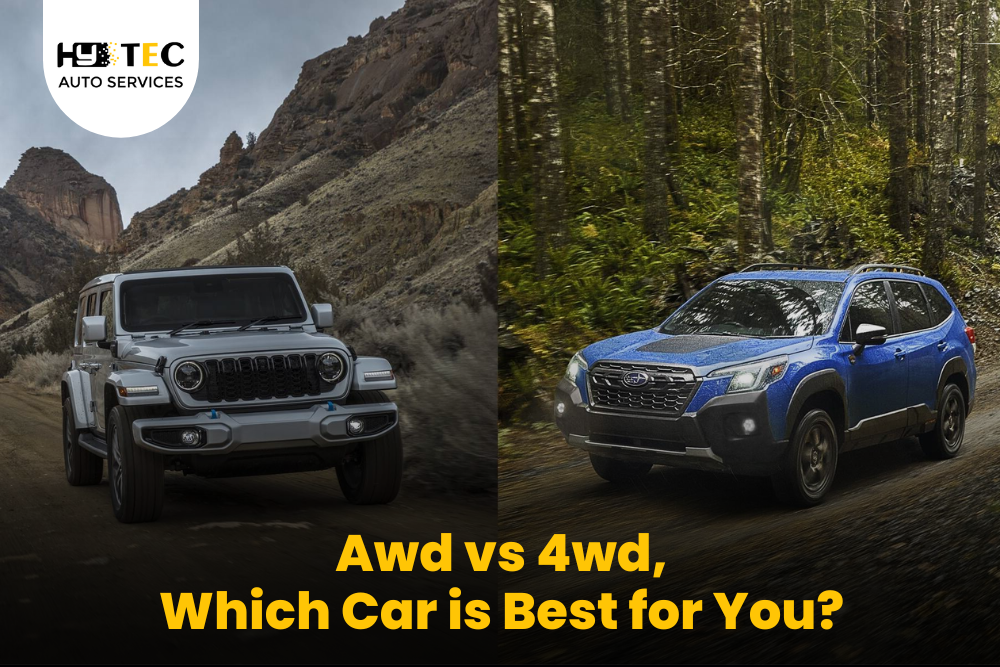
Choosing a car type is important as it requires considerations such as whether the vehicle should be all-wheeled, front-wheeled, or rear-wheeled. Among the most popular are the four-wheel drive and all-wheel drive systems, which have characteristics that can vary greatly when driving.
Whether one wishes to drive within the city for work or during the weekend’s pre-decided off-road ride, it is essential to understand each system’s capacity thoroughly. This blog post will take you through all the basics you need to know to make a correct choice and the difference between AWD or 4WD depending on the particularities of your use.
Understanding Drivetrains
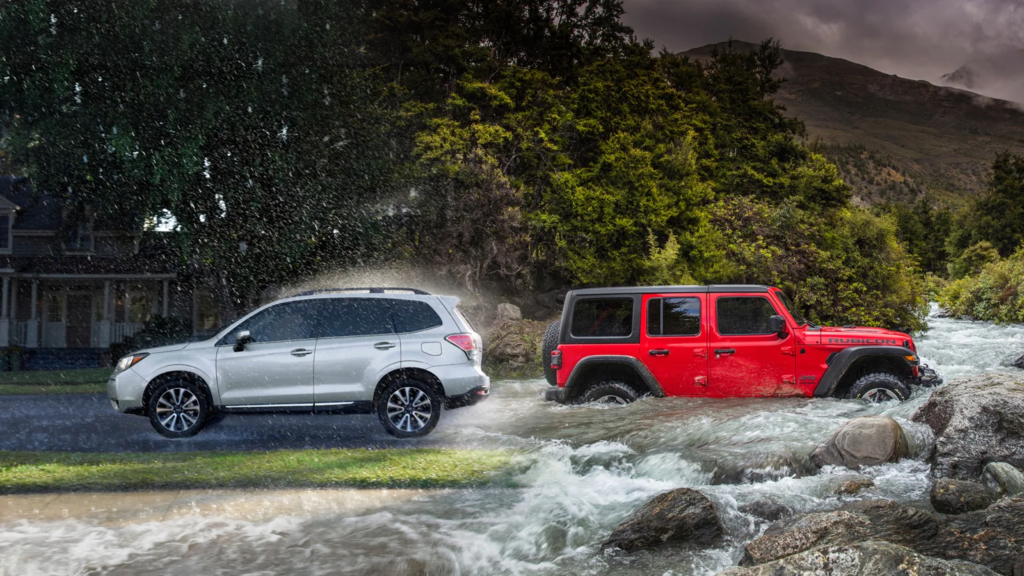
A drivetrain is a combination of parts in a car that transmits power to the wheels. These are the engine, transmission system, driveshafts, differentials, and the wheels. The position and driving method impact the ground performance, fuel consumption, and ride quality. The main types of drivetrains are front-wheel, rear-wheel, all-wheel, and four-wheel. All of them have particular purposes and are useful in certain circumstances.
Get Pre-Purchase Car Inspection today at Hytec Autos
What is All Wheel Drive (AWD)?
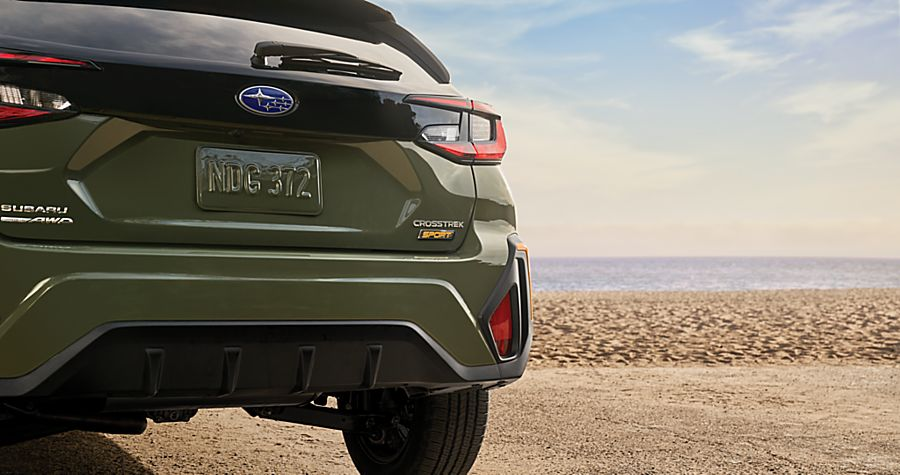
The AWD is meant to constantly send power to all four wheels for increased grip on different roads and regions. Many AWD systems are full-time in which all four wheels supply power throughout their operation. Some systems may be part-time, in which the driver changes 2-wheel drive (2WD) and all-wheel drive (AWD) as necessary.
Benefits of AWD
- Enhanced Traction: Electronic systems such as the AWD help improve traction in climate conditions such as wet, frozen, or icy ground. That is why these two options are perfect for city driving and for people living in regions with different and unpredictable climates.
- Better Handling: This powers all wheels and affords the car good controllability on winding pathways and at high speeds.
- Convenience: These types of systems come on automatically and drivers don’t even have to think about switching modes or even engaging the system.
Drawbacks of AWD
- Fuel Efficiency: Vehicles that have AWD are less fuel efficient than those with FWD or RWD. It is mainly attributable to the increased weight and system complexity due to the incorporation of the AWD system.
- Repair Costs: AWD can involve added costs because of the mechanical sophistication compared to simpler layouts of the drivetrain.
- Limited Off-Road Capability: AWD provides exceptional performance on irresistible surfaces but it may not be very suitable for challenging off-road terrain suitable for radically constructed models.
What is Four Wheel Drive (4WD)?
4WD is essentially a feature of vehicles whose primary use is for off-roading, and this is because it is a method through which the power is divided amongst the four wheels or even transferred selectively, usually with a manual or even an automatic control.
There are two main types of 4WD: full-time and part-time. Permanent 4WD is fixed and switches on and off by the driver while the part-time 4WD is based on the terrain.

Benefits of 4WD
- Superior Off-Road Performance: 4WD transmission delivers very good tractive flexibility and power over irregular surfaces hence very popular among those who use their vehicles for off-road purposes.
- Towing Capacity: 4WD vehicles are designed to transport large payloads, these are used for towing trailers and other kinds of heavy equipment.
- Driver Control: There are a few 4WD systems that allow drivers to select the kind of drive they need at any given moment based on the type of surface they are going to encounter.
Drawbacks of 4WD
- Fuel Consumption: Like most full-time AWD systems, trail-activated 4WDs are not as fuel efficient as 2WD vehicles because of the additional components and extra weight.
- Complexity: Handling and controlling a 4WD system may take many things compared to operating a 2WD, particularly on rough roads.
- Urban Driving Limitations: An off-road vehicle can be less responsive and less nimble in dashing down city streets than an FWD or AWD.
4WD vs AWD
| 4WD | AWD | |
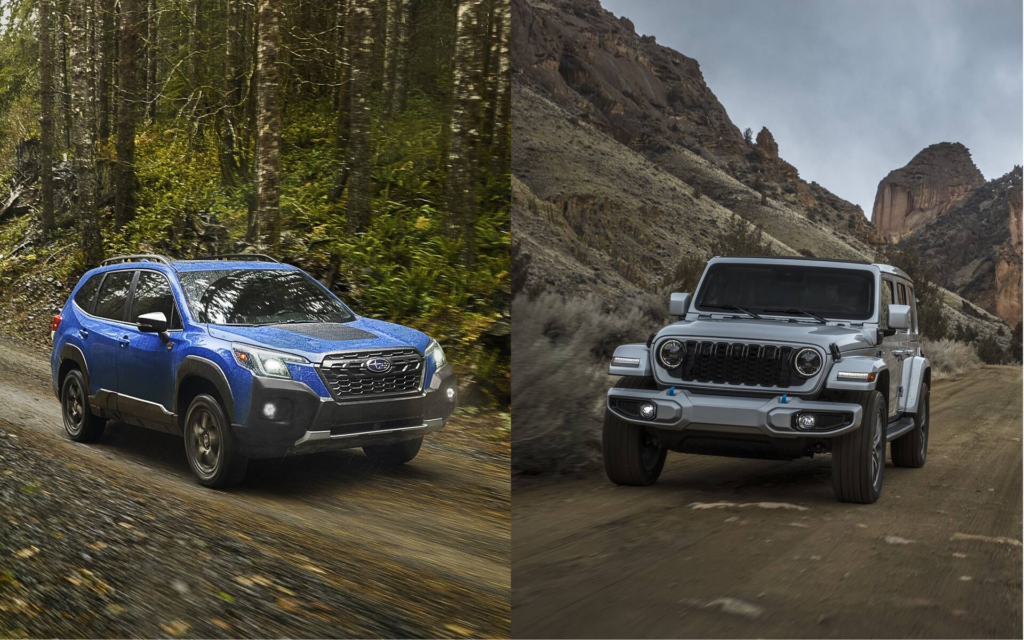
| Driving Condition | It is best suited for serious off-road trails. | It is efficient in urban environments and on demanding off-road terrains. |
| System Activation | It requires manual engagement. | It operates automatically. |
| Fuel Efficiency | It is less efficient than AWD. | It is more efficient than 4WD. |
| Budget | It is better for long-term value if you use 4WD cars for heavy tasks. | These are less expensive. |
| Best for | Best suitable for those who work or play on challenging surfaces. | Best for those who drive mainly in the city but occasionally take their cars out in the mountains. |
Conclusion
In the end, it all levels up to one’s preference and demands for a car especially when it comes to AWD vs 4WD. Each system has its share of strengths and weaknesses and therefore, you ought to focus on your intended usage for your vehicle. But if one knows the difference between the 4WD and AWD, you will be in a position to make the right decision based on your lifestyle and the road conditions where you are likely to drive most of the time.